Ask
Answers to Cambium Networks product questions were already everywhere, in datasheets, spreadsheets, Product Lifecycle Management (PLM) records, support documentation, distributor feeds, and in the heads of colleagues. But getting to the right answer often meant knowing where to look, who to ask, or how to interpret the information before making a decision.
I designed the experience for Ask, an internal AI product expert that brings this knowledge into one place. Rather than making employees search across sources, Ask understands what they’re trying to accomplish, retrieves the right information, and grounds every answer in a source they can verify, from checking a product specification to building a fully priced Bill of Materials (BOM).
The result is an agentic experience that turns “Where do I find this?” into “Ask, verify, and move forward.
01Who and why
Information was everywhere, but getting to the right answer was still a daily source of friction. A product question could mean searching through a datasheet, checking a spreadsheet, looking up a PLM record, finding a Teams message, or waiting for someone who already knew the answer.
I worked on the experience for Ask, an internal AI product expert designed to remove that friction. The opportunity was bigger than making product information easier to search. Ask could understand what employees were trying to accomplish, connect the question to the right source or capability, and help them move forward with an answer they could verify.
Research process
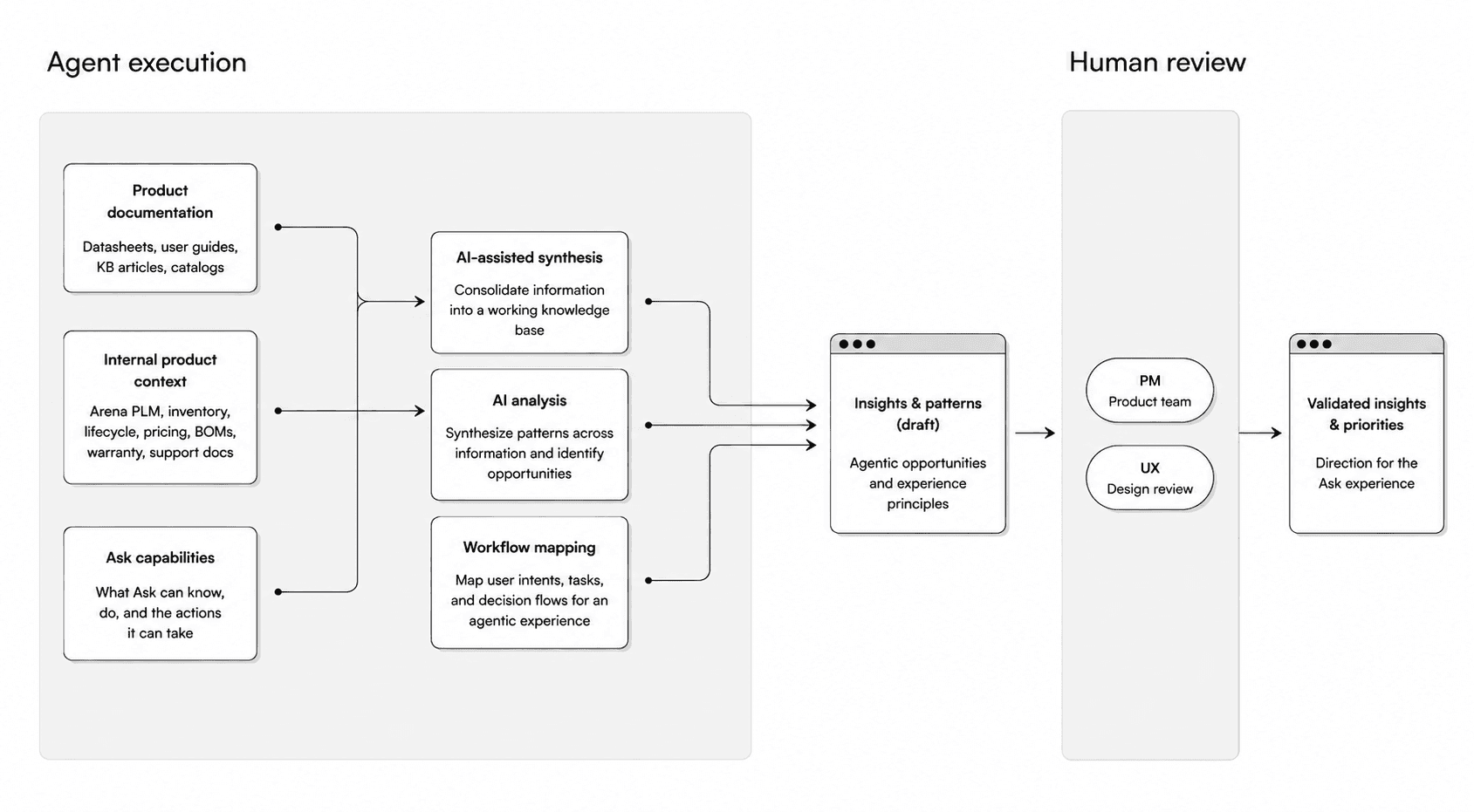
Fully embracing AI tools, I used AI to map Ask’s capabilities, knowledge sources, and potential workflows. I consolidated product documentation and internal context into a working knowledge base, then used AI to identify patterns and opportunities for an agentic experience. I reviewed the findings with the product team and refined the direction around user intent, trustworthy sources, and purposeful actions.
People and their decision friction
Ask was built for teams across Cambium, from sales and support to engineering, operations, product, and marketing. Their questions varied, but the friction was similar: finding a reliable answer often meant searching multiple sources or asking someone who knew where to look.
The opportunity was to replace that search with intent. Users could describe what they needed, while Ask connected their intent to the right information, source, or action.
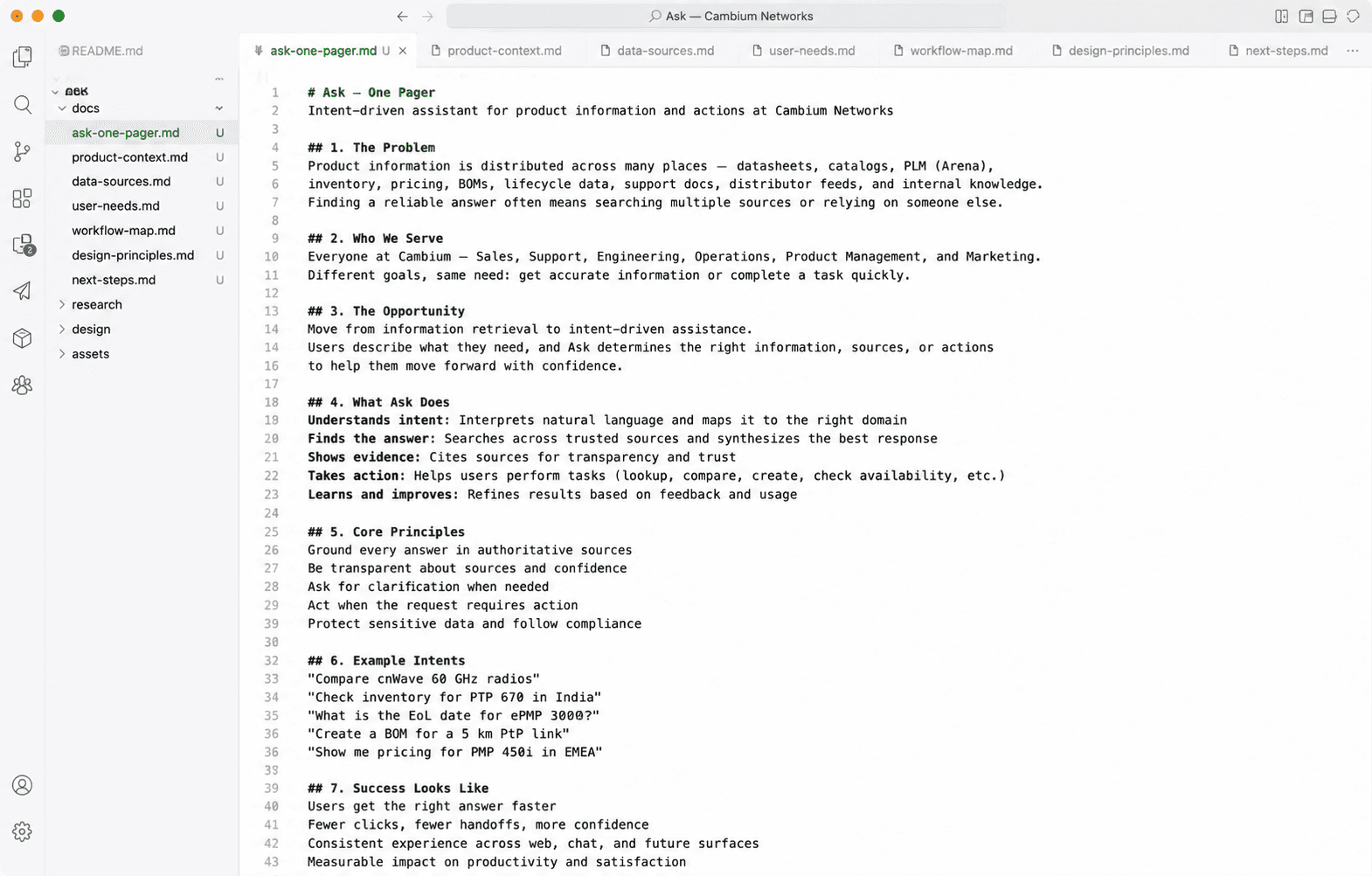
02Define the foundational experience
I designed the experience around a simple idea: users should describe what they need, not figure out where the answer lives. I shaped the interaction around three things: understanding intent, grounding responses in trusted sources, and taking the right action when needed.
Design process
I drove the design with AI tools, using them to rapidly explore interaction patterns, agent behaviors, and visual directions. This helped me test multiple approaches quickly, while I refined the experience around Ask’s capabilities, trusted sources, and the moments where users need the agent to answer, clarify, or act.
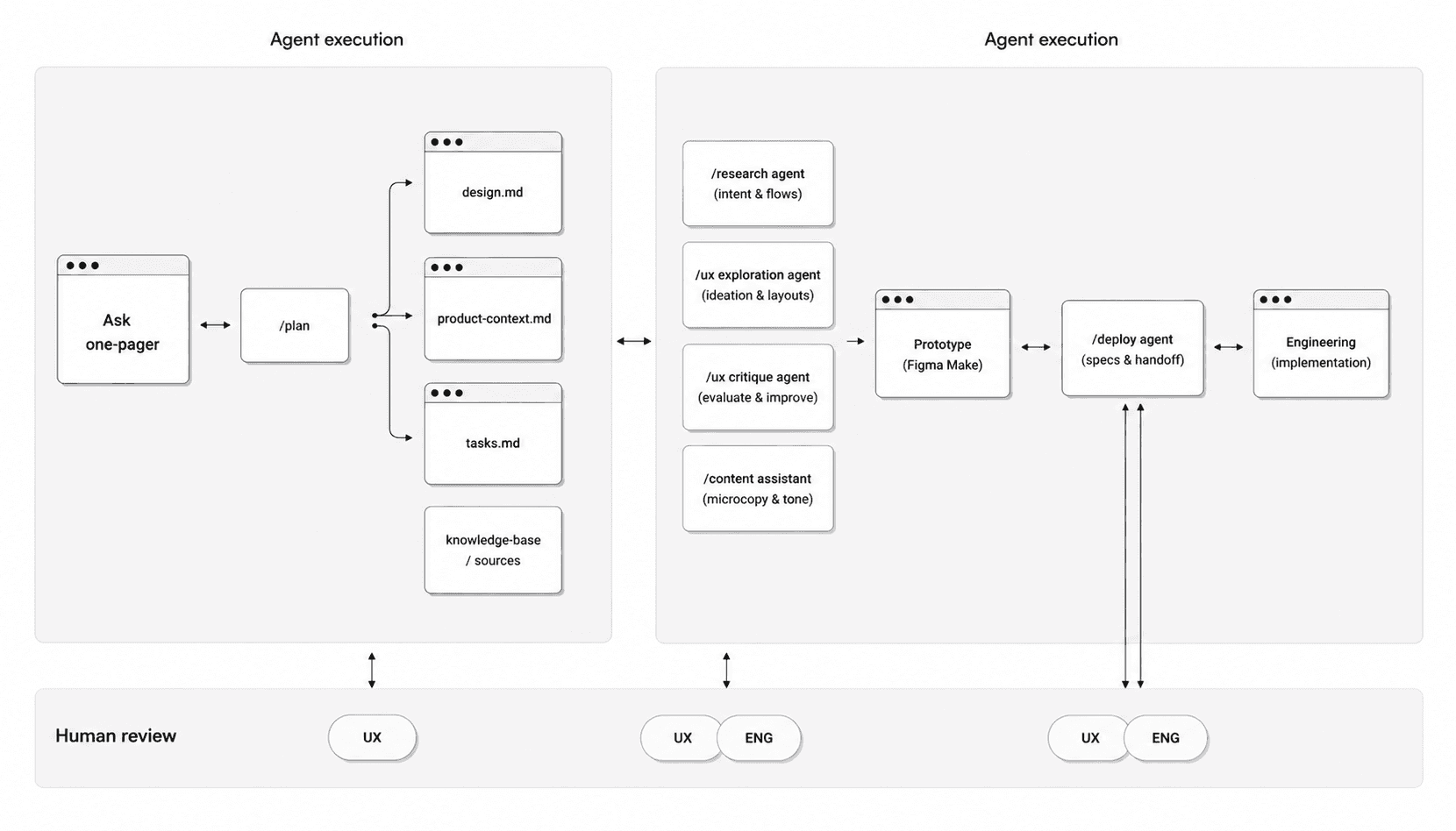
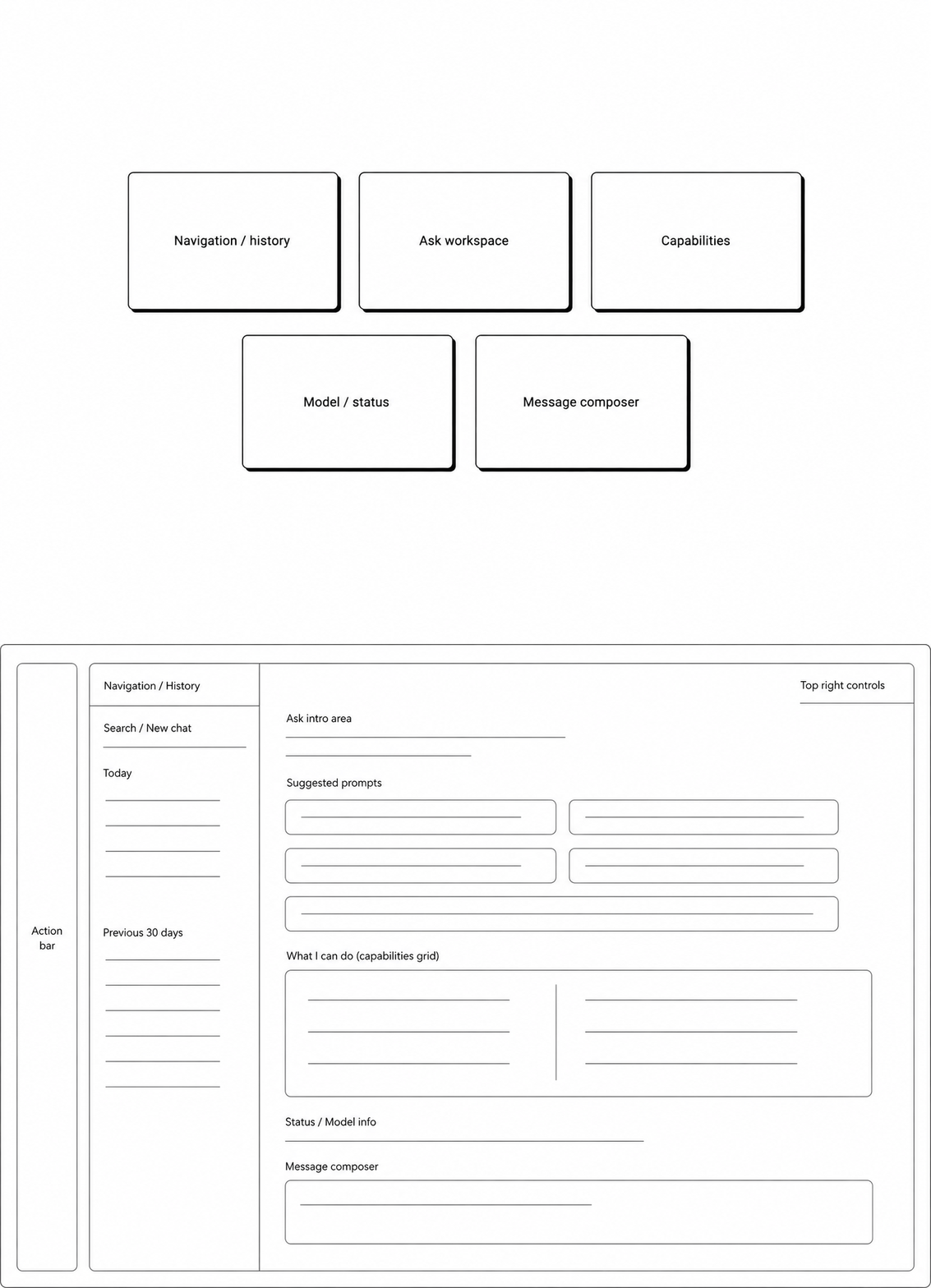
Identify the building blocks and define the interface
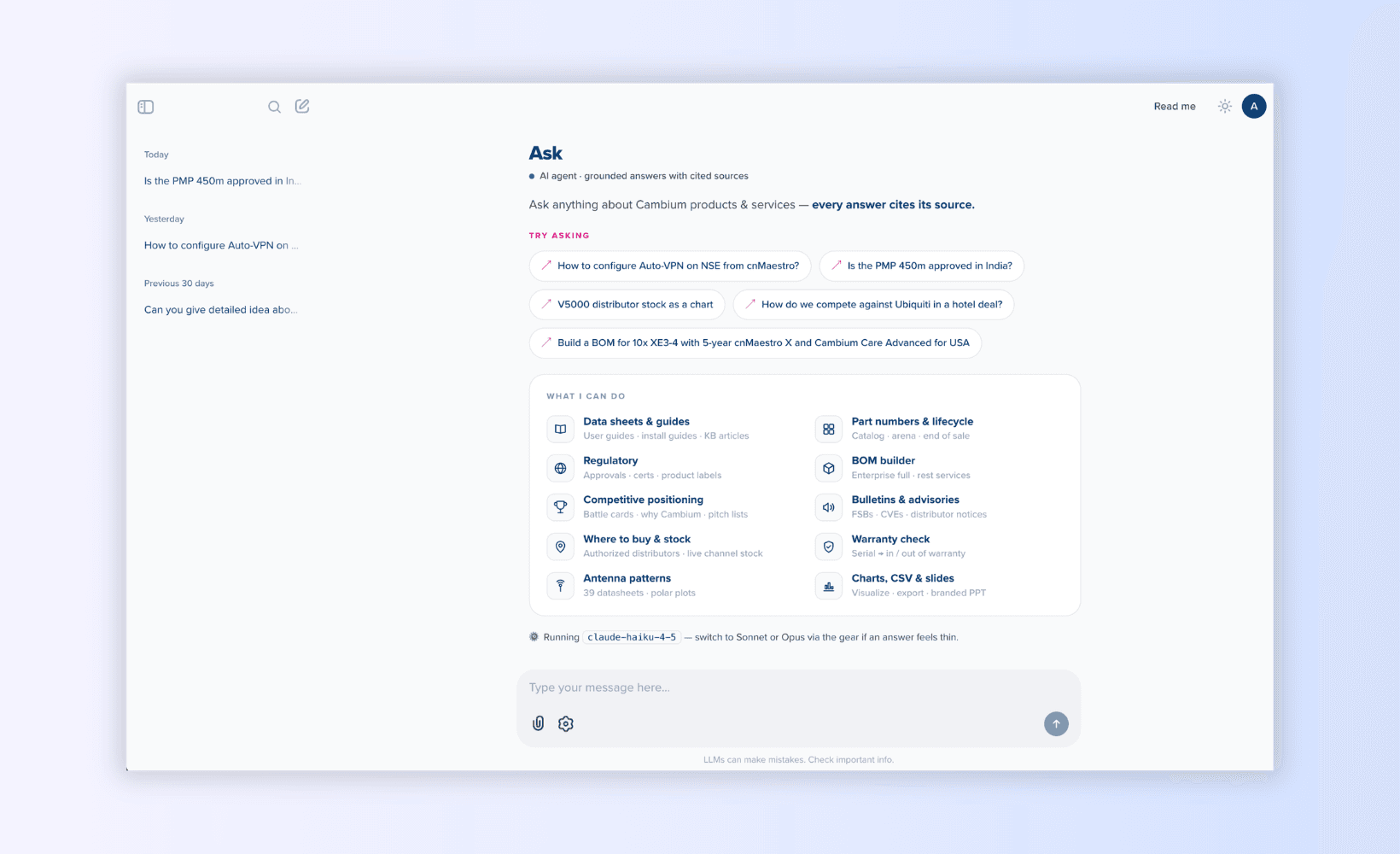
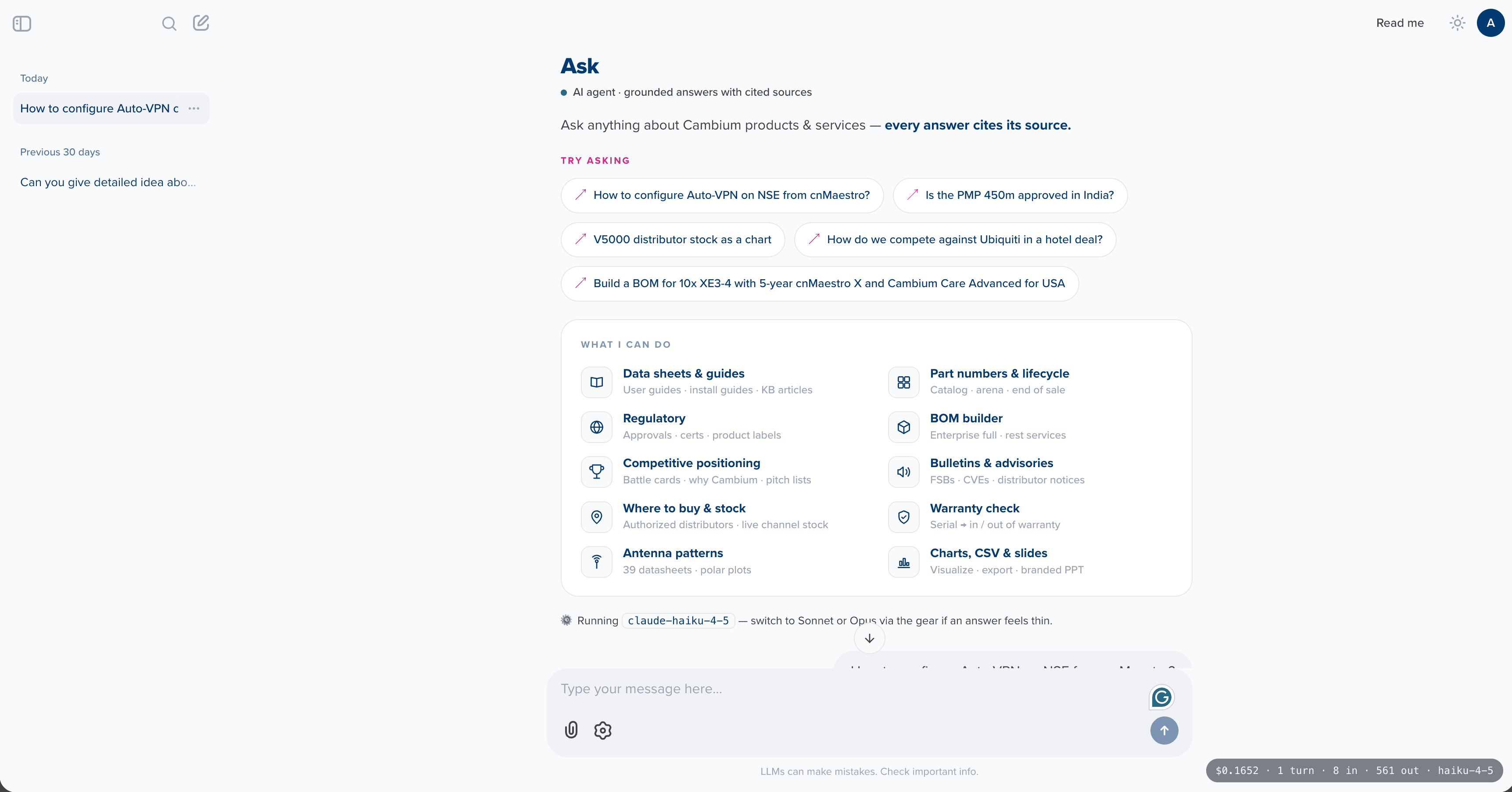
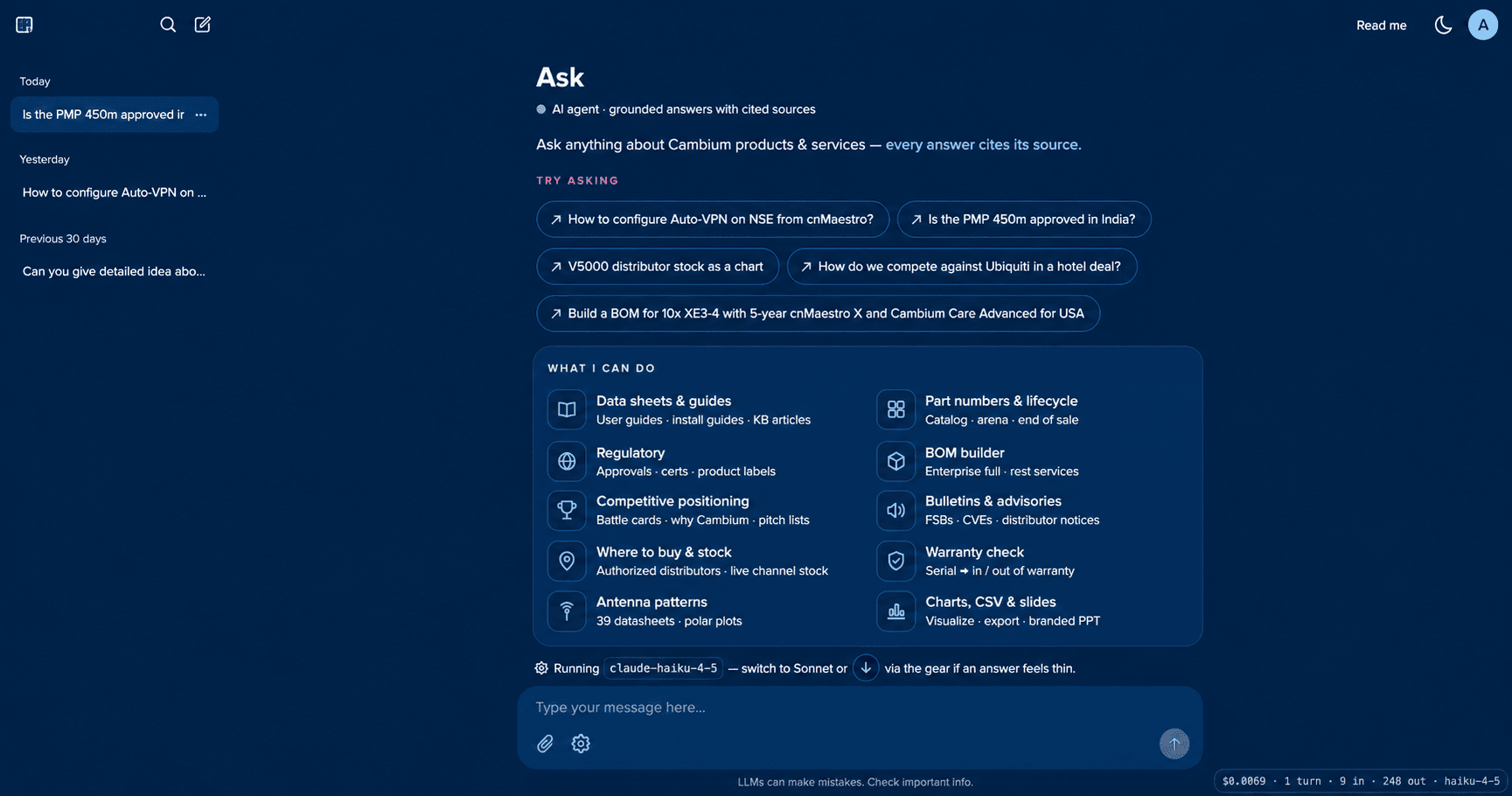
The challenge was making a broad product expert feel approachable without hiding everything behind a blank chat box. I organized the experience around three entry points: suggested questions for quick starts, capability areas to show what Ask can do, and a conversational input for anything beyond the examples.
This gives users a clear path whether they already know what they need or are still exploring what Ask can help with.
Motion and interaction
Ask was designed to do more than return information. It can help customers move from a question to an outcome, building a BOM, checking product and part information, comparing options, or generating a file they can use next.
The interaction shifts from “here’s the information” to “here’s what I understood, what I found, and what you can do next.” This makes Ask feel less like a search interface and more like a product assistant that helps customers complete work.
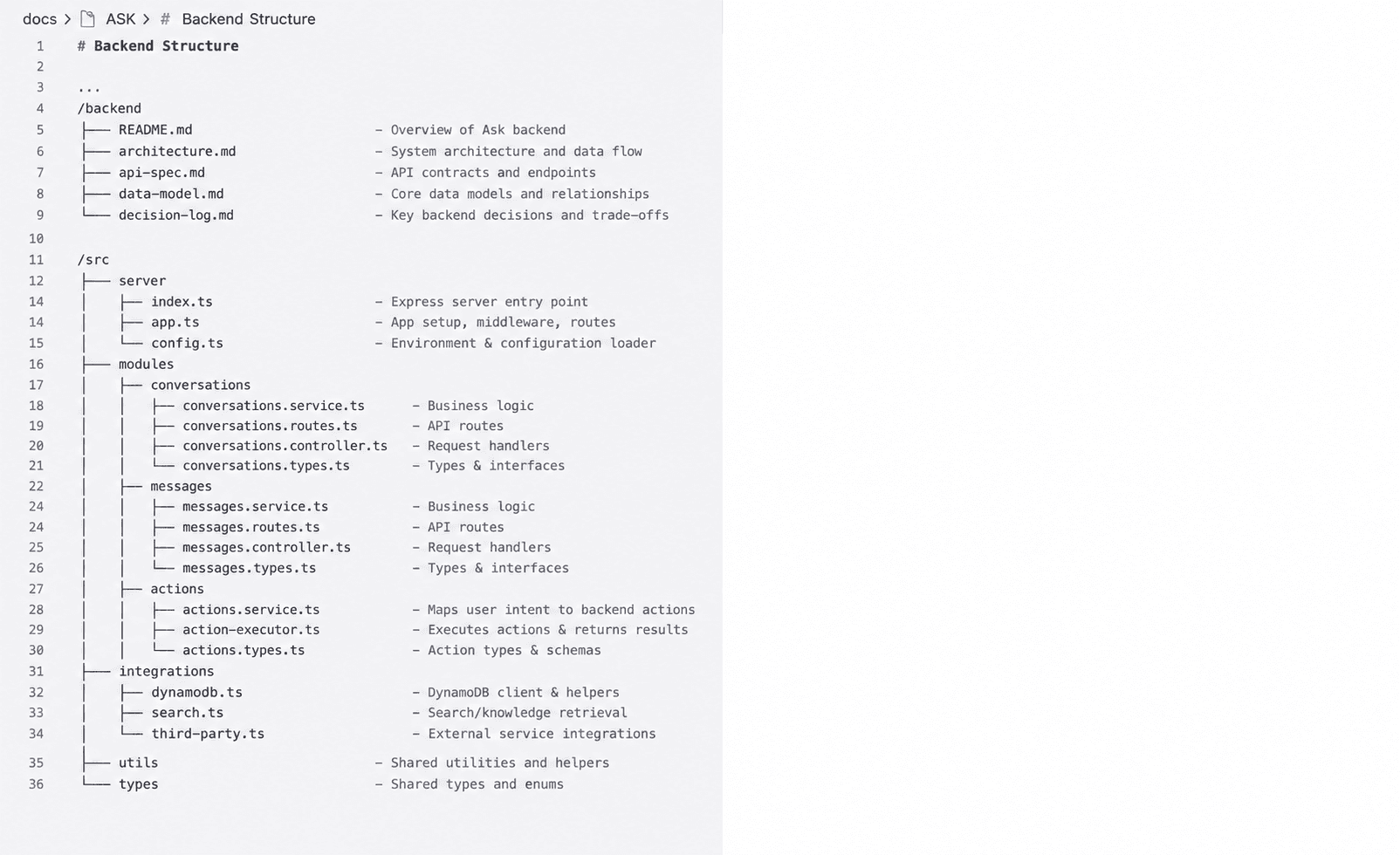
Backend structure and syntax
In parallel, I partnered with engineering to define the structure behind Ask, mapping common user intents to the capabilities and outputs that could support them. This helped us create a system where the interface and backend logic worked together, giving users a consistent path from question to action.
03Detailed design and visual exploration
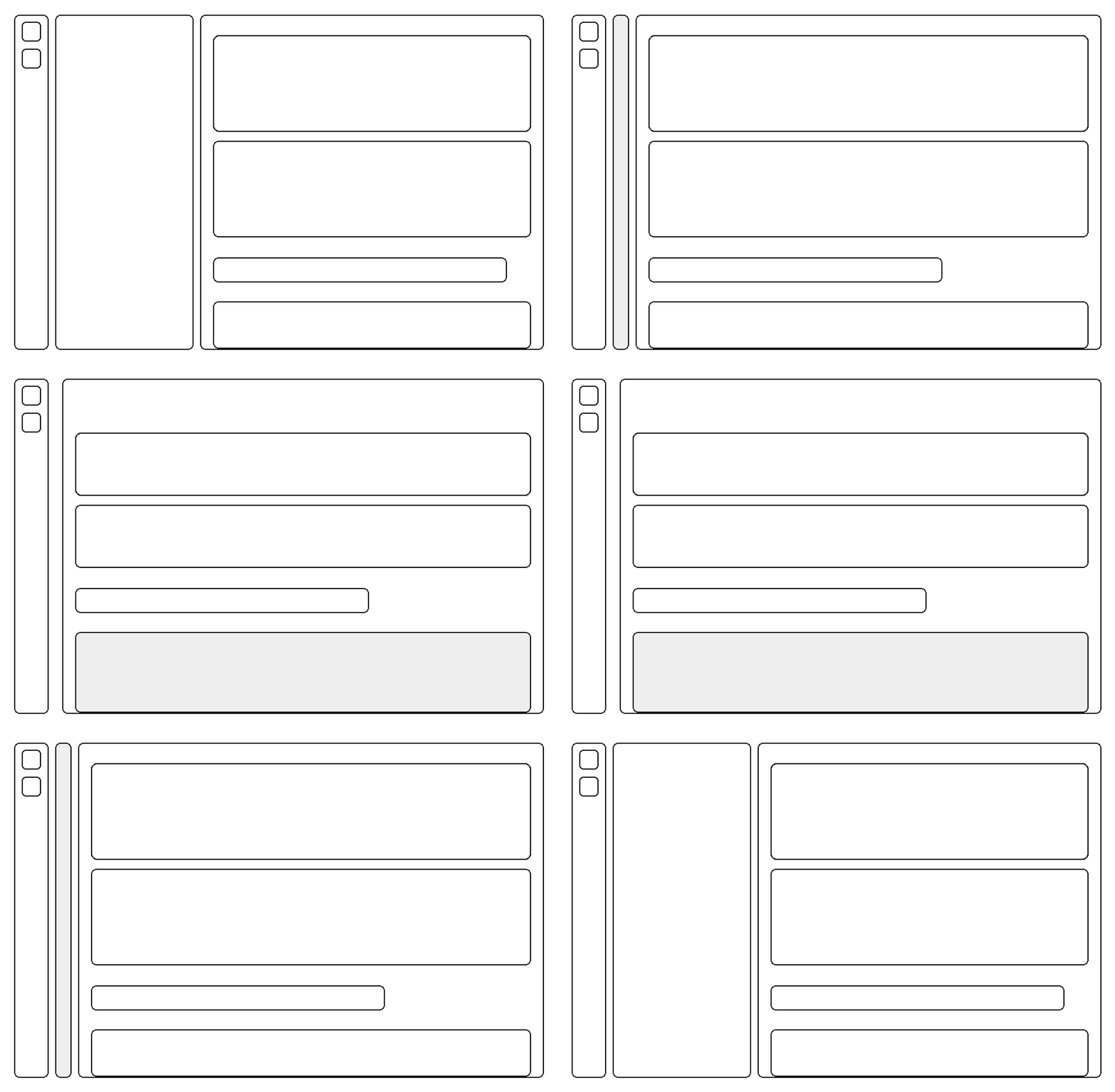
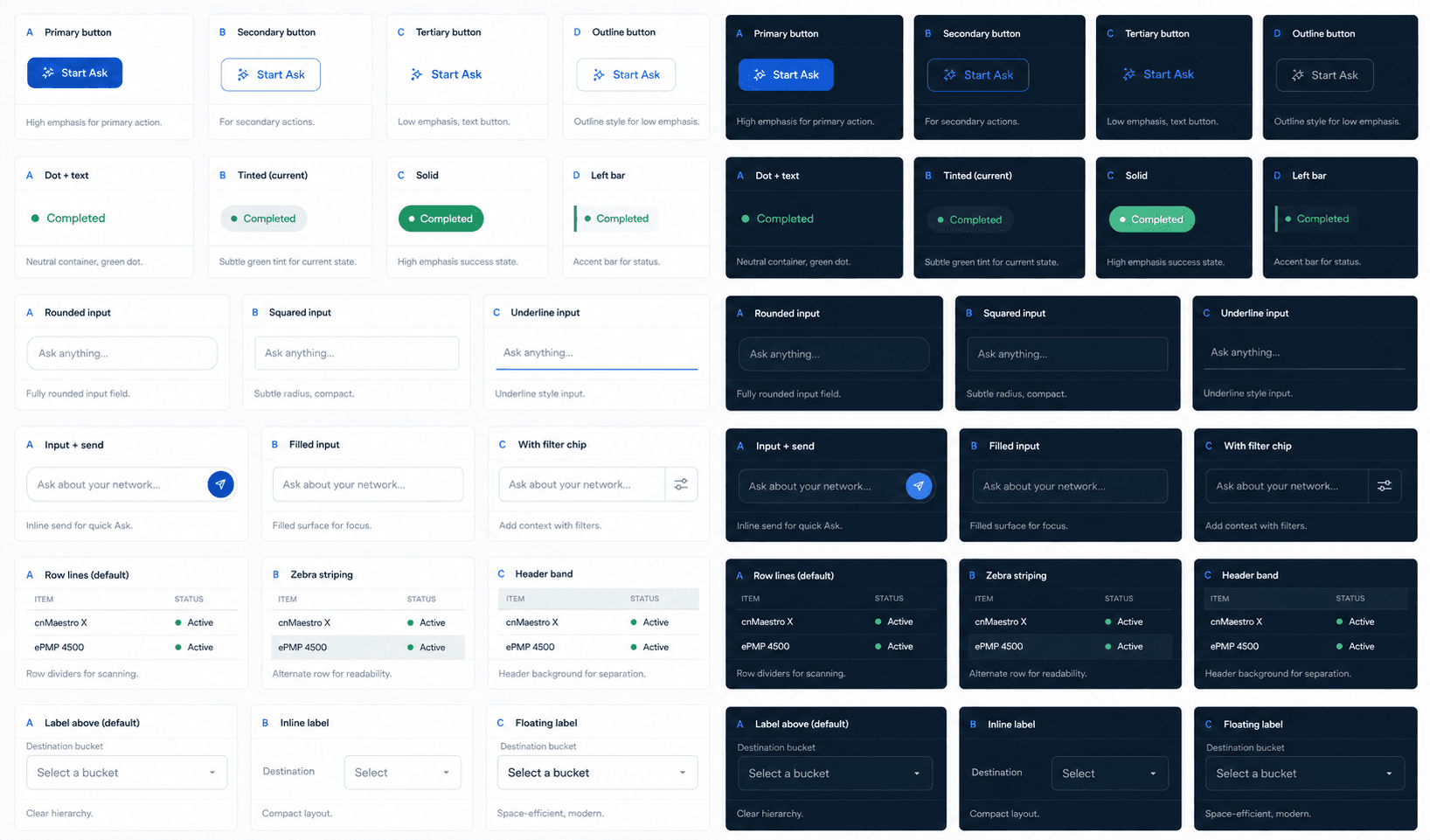
With the layout set, I developed the visual direction for Ask, using the Cambium design system to create a focused, low-friction interface. I made component-level decisions that reduced visual distraction while keeping the experience consistent with the broader product.
Visual exploration
I proposed and developed the visual direction, grounded in the existing Cambium design system and extended to fit the more agentic, conversational feel of the experience. I worked with the Cambium design system team to align on it so the app stays consistent with the rest of the console.
Component decisions
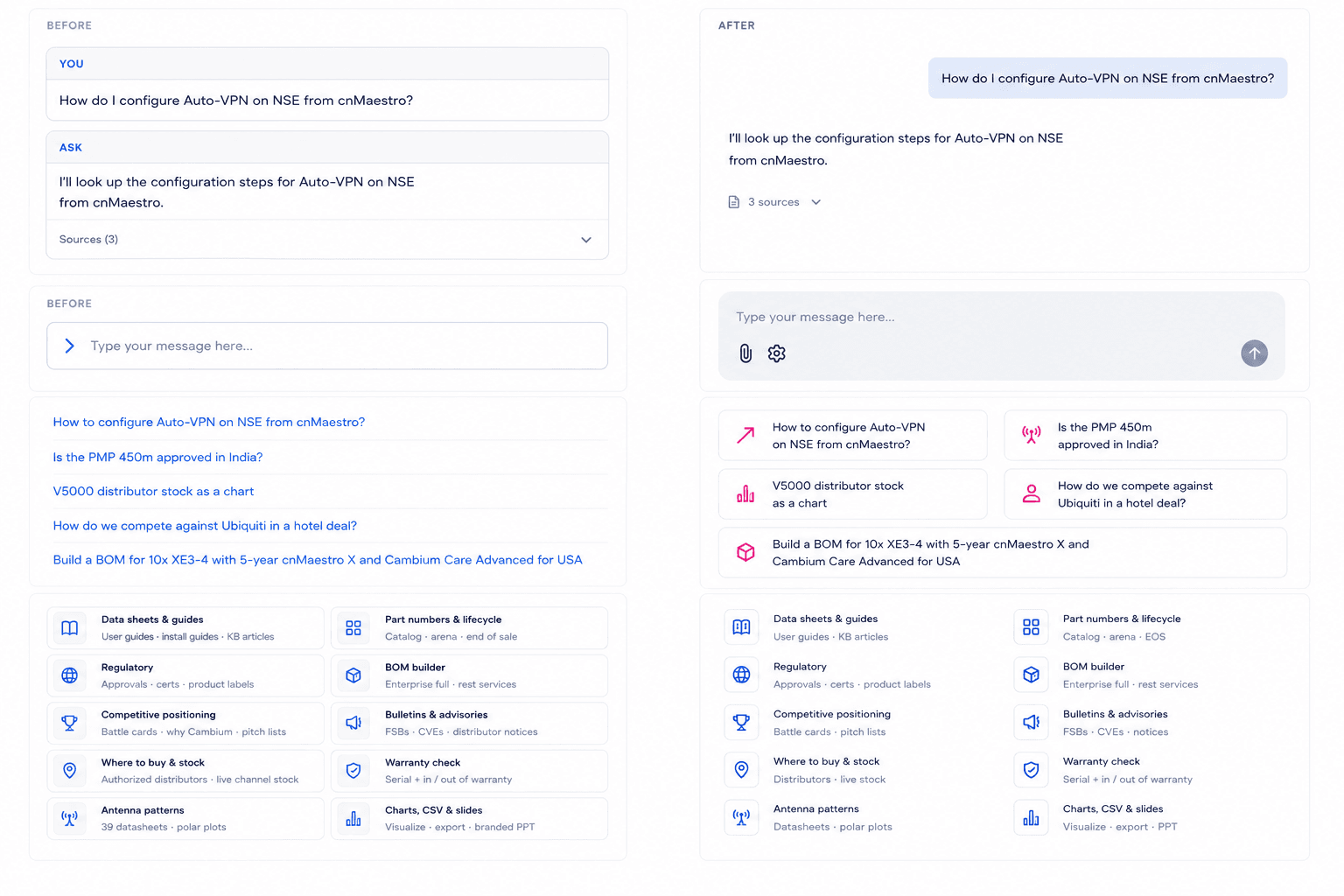
I made component-level decisions to keep Ask focused on the conversation and the task at hand. I removed unnecessary borders, decorative elements, and redundant labels, while using Cambium’s visual language to create a clear hierarchy.
The before-and-after shows how the same interface becomes quieter and more intentional. The goal was not to make the UI look simpler for the sake of simplicity, but to make the important parts of the interaction easier to see, understand, and act on.
04Outcome
A conversational layer that turns Cambium’s product knowledge into something users can ask, understand, and act on.
A CONVERSATIONAL EXPERIENCE THAT MEETS USERS WHERE THEY ARE
Ask is designed around the way people naturally look for product knowledge. Users can start with a simple question, explore the answer, verify the sources, and continue with a more specific request without needing to understand how the underlying information is organized.
The experience keeps conversation at the center while making important context visible when needed. Sources support verification, suggestions help users move forward, and the composer supports different ways of asking.
Whether checking a product specification, comparing products, or troubleshooting an issue, the interaction stays consistent.
Designed for light and dark
The full experience ships in both light and dark mode, built on Cambium's design system so it stays consistent with the rest of cnMaestro.
When product knowledge becomes something you can ask for, teams spend less time finding information and more time using it. In the first month, 1,000+ workflows ran through the assistant and customers completed tasks 20% faster. Every new workflow that onboards compounds the agentic experience.